
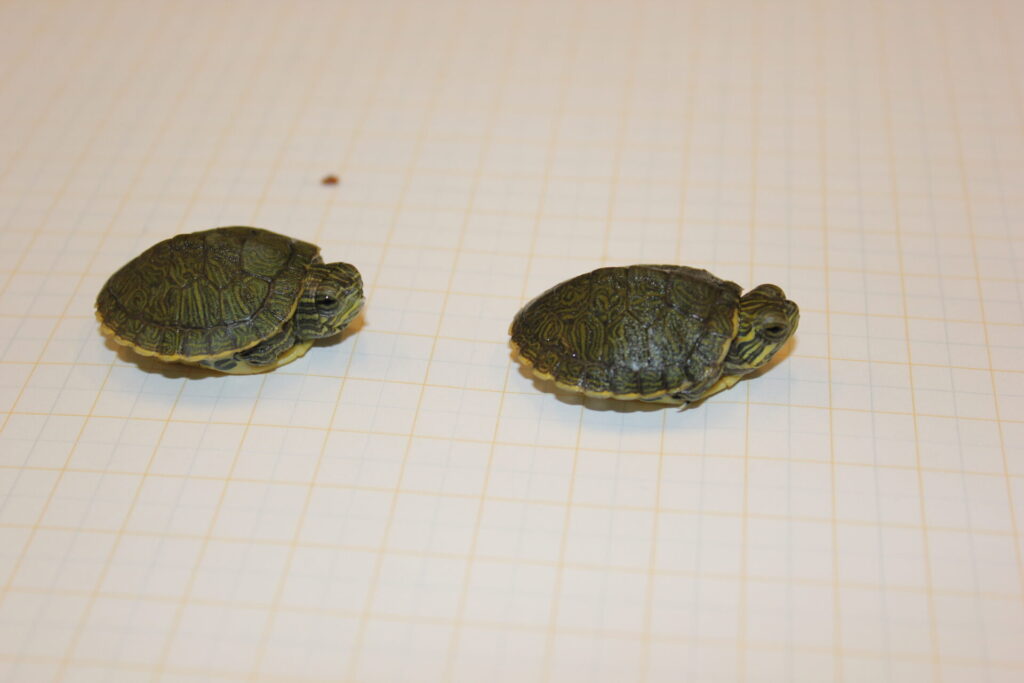
First reproduction of pond slider in wild
DIRKSLAND / MAASTRICHT – For the first time, it has been conclusively established that the non-native red-eared slider (Trachemys scripta) has successfully reproduced in the Dutch countryside. In the spring of 2026, a member of the public discovered a nest and several young turtles at Dirksland (South Holland). This report was passed on to Faunawatch, after which researchers from the Foundation visited the site to investigate and document the situation and the turtles. This discovery constitutes the first evidence of reproduction by the invasive red-eared slider in the Netherlands. Furthermore, it is the northernmost confirmed report of reproduction for this species and suggests that climate change may be accelerating the chances of invasive species becoming established in north-western Europe. The findings have been published in the scientific journal Theriogenology Wild.
First proof of successful reproduction in the wild
In the Netherlands, released or escaped pet turtles – better known as red-eared, yellow-eared and yellow-bellied turtles – have been sighted for decades, but until now there has been no evidence of actual reproduction under natural conditions. It was assumed that the Dutch climate generally does not provide sufficient warmth for embryonic development to be completed.
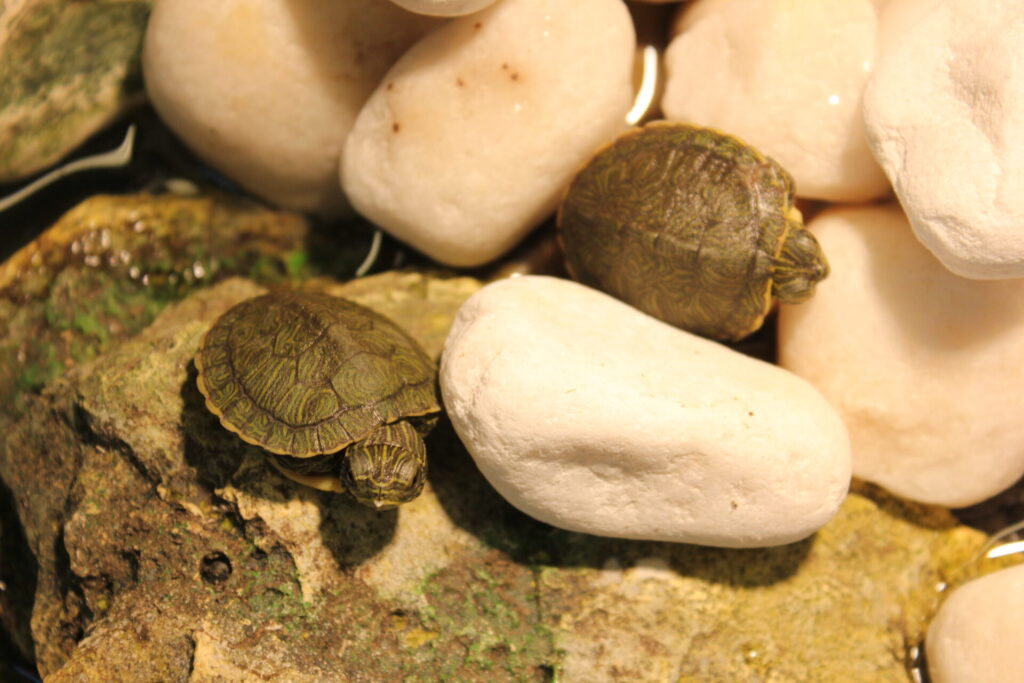
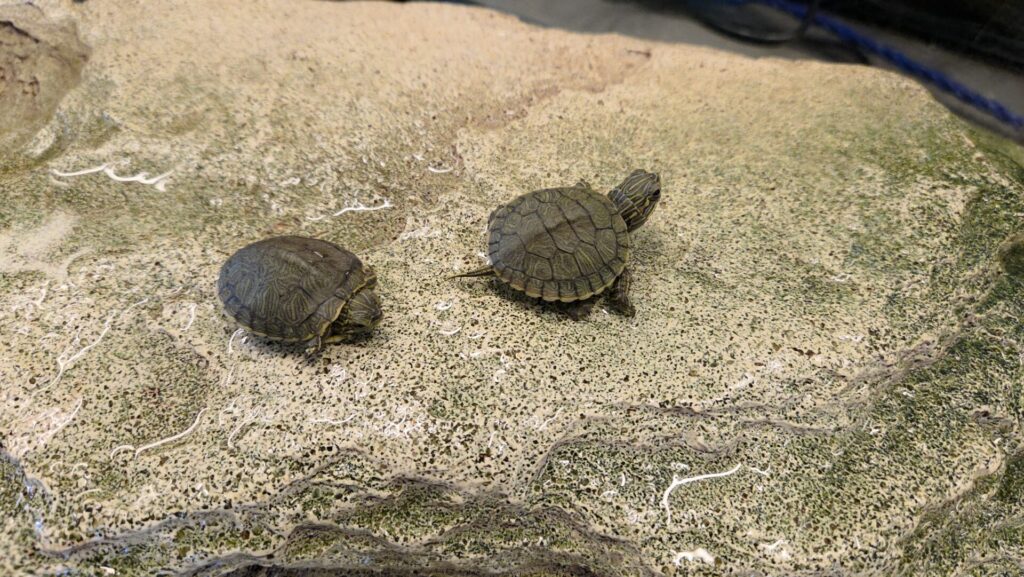
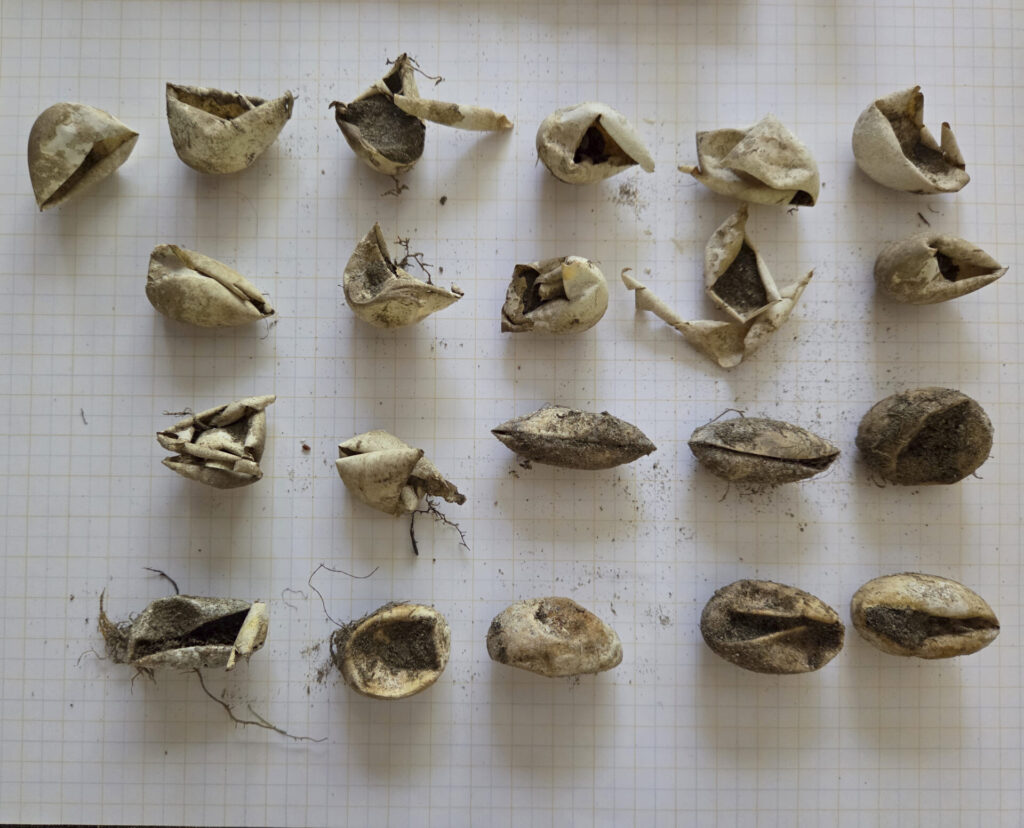
On 3 May 2026, a dead baby turtle was found in Dirksland. Upon closer inspection, a nest was discovered from which a live hatchling emerged at that moment, and three more live hatchlings were found approximately three metres away, heading towards the water. During a follow-up visit on 14 May, two more live hatchlings were found in the nest.
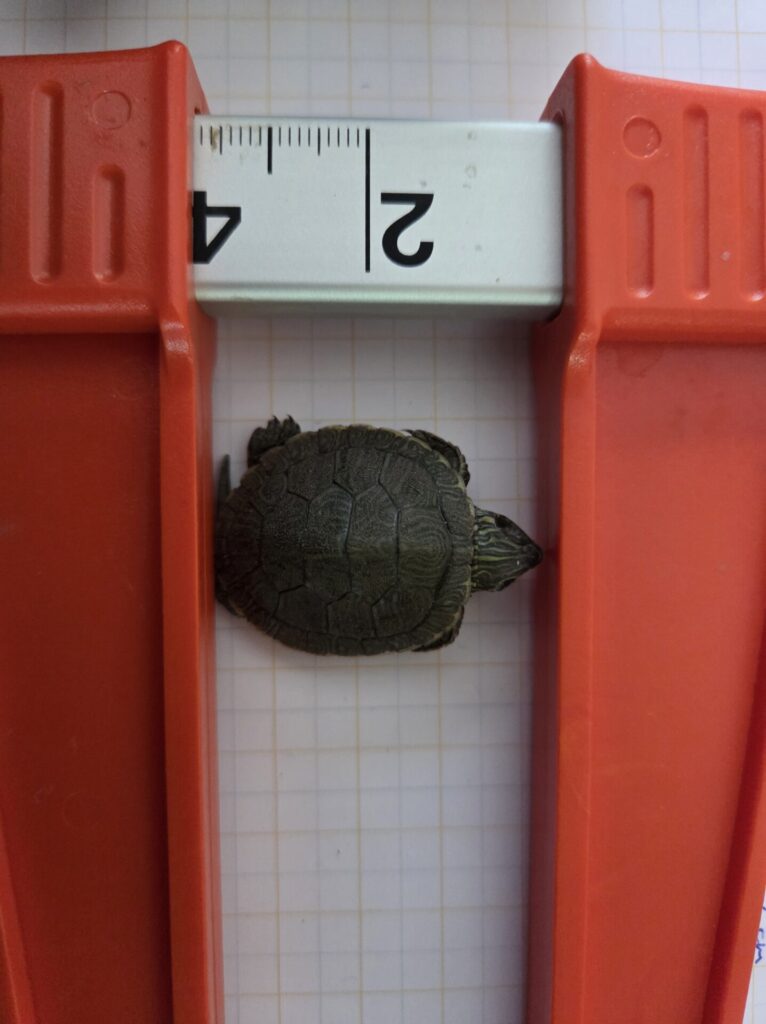
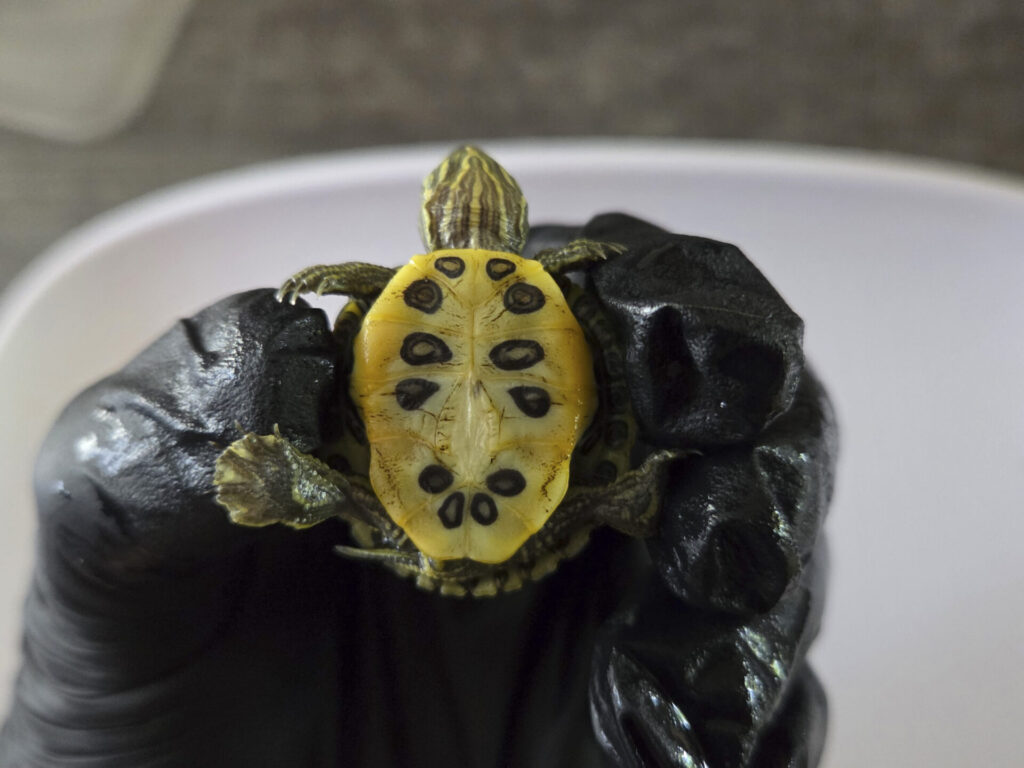
Analysis of the egg remains revealed that the clutch consisted of 21 eggs, 16 of which hatched successfully. The hatchlings weighed between 4 and 5 grams and had a carapace length of 28 to 30 millimetres. Based on characteristics such as the markings on the plastron and carapace and the stripe pattern on the head, the researchers at Faunawatch were able to determine that these were offspring of the lettered tortoise.
Climate change lowers threshold sooner than expected
According to Dr Tim Huijsmans, chair and veterinarian at Faunawatch, the clutch must have been laid in the summer of 2025, after which the hatchlings overwintered in the nest and emerged in the spring of 2026. This strategy of overwintering in the nest is used by turtles in colder climates.
It is striking that a Dutch risk assessment from 2011 concluded that reproduction by non-native tortoises was virtually impossible under the climate conditions at that time and would only become more likely around 2050. The discovery in 2026 shows that the ecological and climatic conditions for reproduction have been met sooner than expected.
Environmental implications and a call for monitoring
Trachemys scripta is included on the EU list of invasive alien species; trade, breeding and the release of these animals are prohibited. Nevertheless, the animals are regularly released, and the number of red-eared sliders in the Dutch countryside is estimated at 200,000. Among other things, the turtles pose a threat to aquatic plants, amphibian larvae, fish and invertebrates. This can be particularly problematic in areas with endangered amphibian species. Further research is needed to determine whether the confirmed case of reproduction is an isolated incident or whether reproduction is also taking place at several other locations in the Netherlands. The authors warn that repeated reproductive success could eventually lead to self-sustaining populations. This would mean that the current eradication policy would no longer be effective and, rather than declining, the population would grow, with greater impacts on native fauna.
The researchers at Faunawatch wish to investigate the reproduction of the lettered tortoise in the Netherlands in greater depth and are seeking to raise funds for this purpose. They hope that, through continued monitoring—including via citizen science and reports from the public—they will be able to better assess the risk to reproduction. They also state that it is necessary to explore management measures and rescue options further. The baby tortoises found on 14 May have been transferred to the Faunawatch Foundation’s turtle sanctuary and are doing well.
Would you like to support the turtles or the research? Donate here.